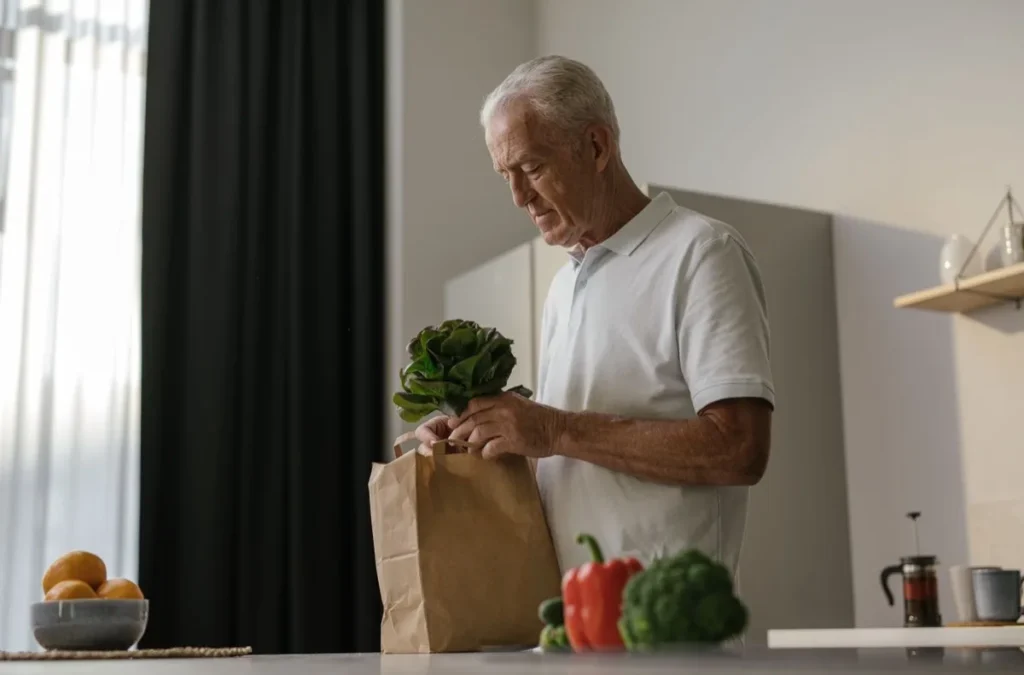
For about a year I blamed my prostate for every night trip and never once looked at my plate. Then I added two columns to the spreadsheet where I logged my nights: what I ate after 4 p.m. and what I drank. Within three weeks the pattern was hard to argue with. The nights after a diet soda with dinner or a second cup of coffee in the afternoon were my worst nights.
The foods and drinks to avoid with an enlarged prostate are real, they are mostly about the bladder and the evening, and changing them costs nothing. Here is what the research and the official guidance say, from a retired engineer who logs everything. I am not a doctor, and every source is linked.
The foods and drinks to avoid with an enlarged prostate are the ones that irritate the bladder or fill it at night: caffeine, alcohol, fizzy drinks, artificial sweeteners and acidic foods like citrus and tomato. Long term, daily red meat is linked to more BPH, and four or more servings of vegetables a day to less.
What foods aggravate an enlarged prostate?
Most of what “aggravates” an enlarged prostate is really aggravating the bladder that sits right above it. When the prostate narrows the urethra, the bladder already works harder to empty. Anything that irritates the bladder lining or adds fluid late in the day makes that job worse, and you feel it as urgency and extra trips.
Urologists at the Cleveland Clinic name the usual suspects, and they match what showed up in my log:
| Food or drink | Why it bothers you | What I do instead |
|---|---|---|
| Coffee, tea, energy drinks | Caffeine irritates the bladder and makes you produce more urine | Coffee before noon only, then decaf |
| Beer, wine, spirits | Alcohol makes you pee more and breaks up sleep | Earlier in the evening, and one, not three |
| Soda and sparkling water | Carbonation irritates the bladder | Still water, mostly before dinner |
| Diet soda and “sugar free” snacks | Artificial sweeteners are a common bladder trigger | Plain water or a splash of juice earlier in the day |
| Citrus, orange juice, tomato sauce | Acidic foods can irritate the bladder lining | Keep them for lunch, not a late dinner |
| Chocolate | It contains caffeine | Not after dinner |
Two things matter about that list. First, triggers are personal. The Cleveland Clinic dietitian says plainly that what bothers one person may not bother the next, which is why a food diary beats any list. Second, timing matters as much as the food. A coffee at 8 a.m. and a coffee at 4 p.m. are not the same coffee for a man who gets up at night.
Drinks to avoid with an enlarged prostate
If you only change one thing, change the drinks. Both the NIDDK and the NHS give the same two pieces of advice: cut down on alcohol and caffeine, and drink less before bed and before you go out.
The NHS adds the part most men skip: make sure you still drink enough during the rest of the day. The Cleveland Clinic gives the same advice, because plenty of water dilutes your urine and keeps it gentler on the bladder. The trick is moving your drinking earlier, not doing less of it.
My own rule, after the spreadsheet: most of my water before 6 p.m., nothing big after 7, no caffeine after noon, and a beer with an early dinner rather than one in front of the late game.
Foods to avoid with an enlarged prostate for the long run
The bladder irritants explain the night trips. The long run question is different: does what you eat change your odds of the prostate causing trouble at all?
The best data I found comes from a study of 4,770 men in the Prostate Cancer Prevention Trial, followed for seven years. Men who ate red meat every day had a 38% higher risk of developing symptomatic BPH than men who ate it less than once a week. Men in the highest group for total fat had a 31% higher risk. On the other side, men who ate four or more servings of vegetables a day had about a third lower risk than men who ate less than one, and more protein was linked to lower risk.
It is the largest look at diet and BPH I found, it points the same way as the rest of the advice, and it is the same eating pattern doctors recommend for your heart and blood sugar. The NIDDK lists obesity, type 2 diabetes and heart disease among the things that make BPH more likely, so food that helps those helps here too.
One more practical point from the NHS: eat enough fiber. Constipation puts pressure on the bladder, and straining makes urinary symptoms worse.
Can diet shrink an enlarged prostate?
Diet works on the symptoms rather than the size of the gland. The NIDDK puts it plainly: researchers have not found eating, diet or nutrition to cause or prevent BPH, but changes in what you eat and drink could help treat or lessen some symptoms.
That is still a lot. Fewer night trips and less urgency are what most of us actually want. Diet handles the bladder side. For the prostate side, men add a supplement built on the studied ingredients, and that is where the evidence gets more interesting.
What foods are good for an enlarged prostate?
Vegetables, and plenty of them. Four or more servings a day was the strongest food finding in the study above.
Pumpkin seeds. This is the one food with a large trial behind it. In the year long GRANU study, 58.5% of men eating pumpkin seed had a meaningful drop in their symptom score, against 47.3% on placebo. I compare it with saw palmetto in saw palmetto vs pumpkin seed for prostate.
Protein from lean sources, since higher protein was linked to lower risk, and fiber from beans, oats and whole grains to keep things moving.
Tomatoes, cooked and earlier in the day. The same study pointed to lycopene, the compound in cooked tomatoes, as helpful too. Since tomato is also acidic, I eat it at lunch.
The ingredients that keep coming up in prostate research (plant sterols, pygeum, saw palmetto and pumpkin seed) are hard to get in useful amounts from a normal plate. That is why I take them together in one formula. I went through the evidence in the best prostate supplement for an enlarged prostate, and the one I take is in my ProstaFense review, with a 60 day money back guarantee on every bottle.
An enlarged prostate diet: what my day looks like now
- Breakfast: coffee, oatmeal or eggs, and a big glass of water. This is where most of my fluid goes.
- Lunch: the acidic stuff lives here: tomato, a squeeze of lemon, the orange juice I used to drink at night.
- Afternoon: water, decaf, a handful of pumpkin seeds.
- Dinner: early, vegetables on half the plate, red meat a couple of times a week instead of most nights.
- After 7 p.m.: sips, not glasses. No soda, diet or regular.
None of it is a diet in the miserable sense. It is mostly moving the same food and drink to a different time of day.
What to take from Reddit threads about it
When you read threads about an enlarged prostate diet, the useful posts are from men who changed one thing at a time and say what happened to their night trips. A man who cut evening coffee and counted his trips for two weeks has told you something real. A list of thirty superfoods with no before and after has not.
Frequently asked questions
What foods should you avoid with an enlarged prostate? Mainly bladder irritants, especially in the evening: caffeine, alcohol, carbonated drinks, artificial sweeteners, and acidic foods like citrus, orange juice and tomato sauce. For the long run, limit daily red meat and high fat meals.
What drinks should you avoid with an enlarged prostate? Coffee, tea and energy drinks after midday, alcohol in the evening, soda and diet soda. The NIDDK and the NHS both advise cutting down on alcohol and caffeine and drinking less before bed, while still drinking enough during the day.
Is coffee bad for an enlarged prostate? Caffeine irritates the bladder and increases urine, which makes BPH symptoms worse. The simple fix is coffee in the morning and decaf after noon.
Can diet shrink an enlarged prostate? Diet works on symptoms rather than size. The NIDDK says diet does not cause or prevent BPH but can lessen some symptoms, especially by limiting caffeine, alcohol and evening fluids.
What foods are good for an enlarged prostate? Vegetables (four or more servings a day were linked to lower BPH risk), pumpkin seeds, lean protein and fiber. Pumpkin seed is the only food with a large trial showing symptom improvement.
Is red meat bad for an enlarged prostate? In a seven year study of 4,770 men, those who ate red meat daily had a 38% higher risk of symptomatic BPH than men who ate it less than once a week.
Are tomatoes good or bad for an enlarged prostate? Both, depending on timing. Tomato is acidic and can irritate the bladder, but it is also the main source of lycopene, which the same study pointed to as helpful. Eat it earlier in the day.
What should I eat at night with an enlarged prostate? An early dinner with vegetables and lean protein, and small sips instead of glasses afterwards. Skip soda, alcohol and acidic food late in the evening.
What can I take besides diet changes? The natural next step is to pair the diet with a prostate supplement built on studied ingredients such as plant sterols, pygeum, saw palmetto and pumpkin seed. My full look at one is in my ProstaFense review.
Keep reading
- How to stop waking up to pee at night: a man’s guide
- Natural remedies for enlarged prostate that actually help
- Best prostate supplement for enlarged prostate
- Does an enlarged prostate cause ED?
Dale Prescott is a retired structural engineer in Fort Collins, Colorado. He is not a medical professional, and nothing on this page is medical advice. Talk to your doctor about new urinary symptoms or before making big changes to your diet. Some pages on this site contain affiliate links, which means The Night Flow Report may earn a commission if you buy through them, at no extra cost to you.